Perfumery has a vocabulary, and olfactive families are its grammar. They are not rigid boxes — most great fragrances live between categories — but they give you a way to recognise patterns in what you love and to ask for more of it.
Floral
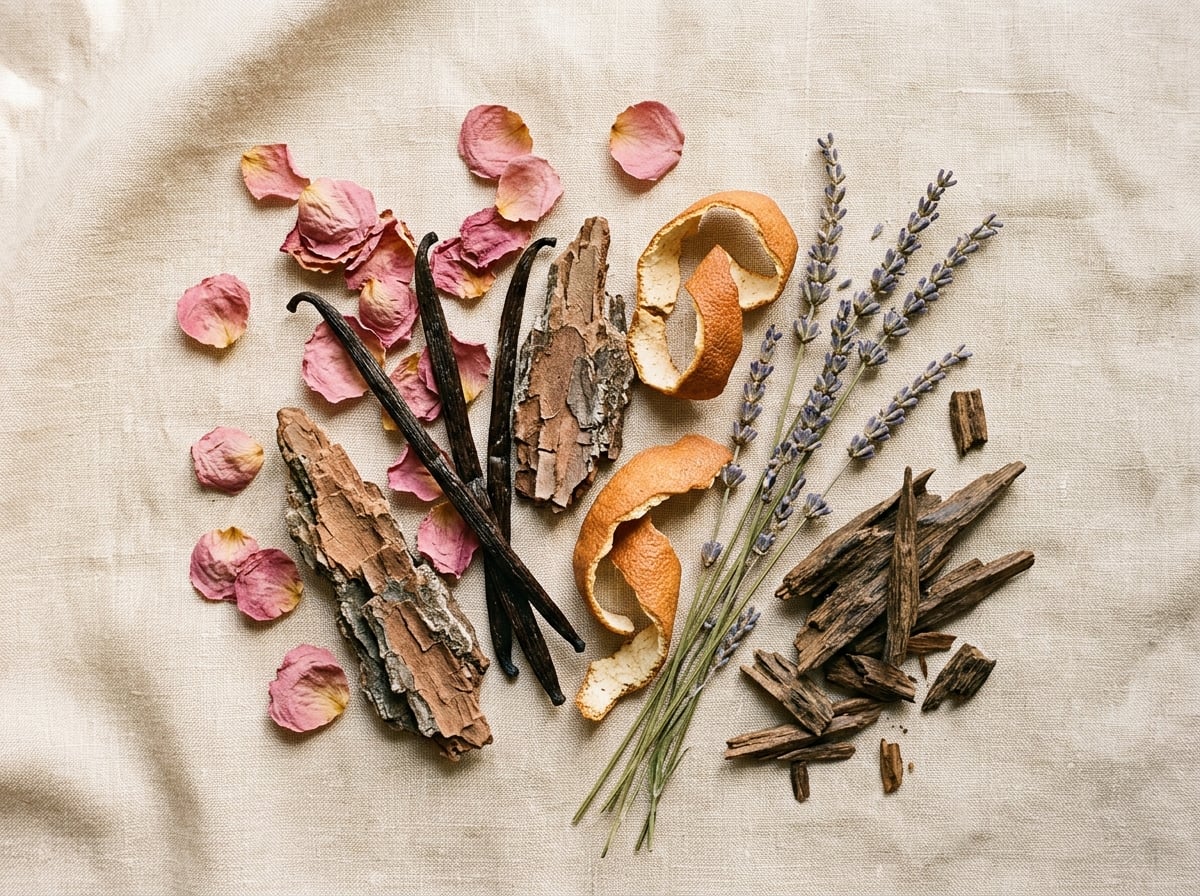
The largest family in perfumery. Floral fragrances can be a single bloom (a soliflore like rose or jasmine) or a bouquet of many flowers. They range from luminous and airy to opulent and almost narcotic. In niche perfumery, florals often feel less sweet and more textured: green stems, dewy petals, even a touch of soil.
Woody
Woody fragrances are built around sandalwood, cedar, vetiver, patchouli and similar materials. They feel grounded, warm and quietly confident. They are often the spine of a perfume — what holds everything else together.
Amber and oriental
Amber compositions are rich and enveloping. Vanilla, benzoin, labdanum and resins create a soft, golden warmth that feels almost edible. Niche amber fragrances often add incense, spices or oud to add depth and shadow.
Fresh and citrus
Bergamot, lemon, neroli, grapefruit and mandarin define this family. Fresh fragrances feel like morning light. In niche perfumery, citrus is rarely simple — it might be paired with vetiver, incense or leather to create something luminous and unexpected.
Spicy and aromatic
Pepper, cardamom, clove, cinnamon, basil and lavender belong here. Spicy fragrances feel alive and energetic, while aromatic ones — built on herbs and lavender — feel calm and clean. The two often appear together.
Leather
Leather accords are constructed rather than extracted — perfumers build them from materials like birch tar, styrax and quinolines. They can feel smoky, suede-soft, or even floral-tinged. Leather perfumes carry a strong sense of identity.
Gourmand
Gourmand fragrances draw on edible notes: vanilla, caramel, honey, chocolate, coffee, toasted almond. Done well, they are not childish or sugary — they are sensual and intimate. In niche perfumery, gourmand notes are often paired with smoke, leather or spice to balance the sweetness.
Musky
Musk is what makes a fragrance feel close, soft and skin-like. White musks feel airy and clean; darker musks feel animalic and warm. Musk is often invisible by itself but indispensable in shaping the way a perfume sits on you.
How to use families when you explore
When you find a fragrance you love, try to identify which families speak loudest in it. Then explore other perfumes in that same territory. Over time, you will notice a pattern — and that pattern is the beginning of your personal scent identity.